 Crystal Council Rock Identifier
 Scan to Download



The Three Main Types of Rock
Knowing which family a rock belongs to is the first step in identifying it. Here is what to look for.
Igneous
Formed when magma or lava cools. Look for crystals, glassy surfaces or bubbles.
Examples: granite has visible speckled grains, basalt is dark and fine-grained, obsidian is black glass, and pumice is so full of holes it can float.Sedimentary
Built from layers of sand, mud or shells pressed together over time. Look for layers, grains and fossils.
Examples: sandstone feels gritty, limestone fizzes in acid, shale splits into thin sheets, and conglomerate has rounded pebbles cemented together.Metamorphic
Existing rock changed by heat and pressure. Look for bands, a sparkly sheen or flat splitting.
Examples: marble comes from limestone, slate from shale, quartzite from sandstone, and gneiss has bold light and dark bands.Popular Rocks and Stones People Identify
These are some of the rocks and stones our rock identifier sees most, with the clues that give each one away.
Over 1,000 crystal types including...
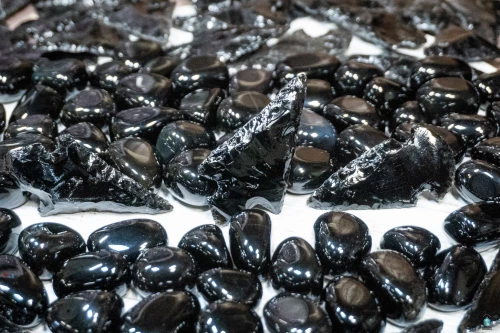
Obsidian
Black volcanic glass with a shiny luster and sharp, curved fracture edges. It cools too fast to form crystals.
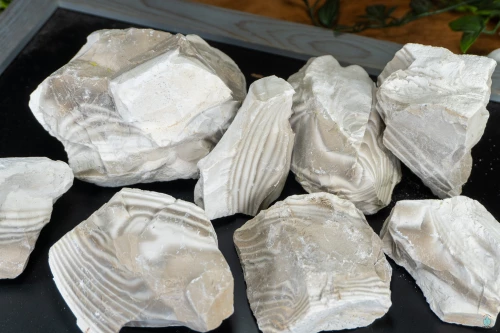
Flint
Dense grey to black quartz that breaks into sharp, curved flakes. It often has a chalky white outer rind and is found in chalk and limestone.
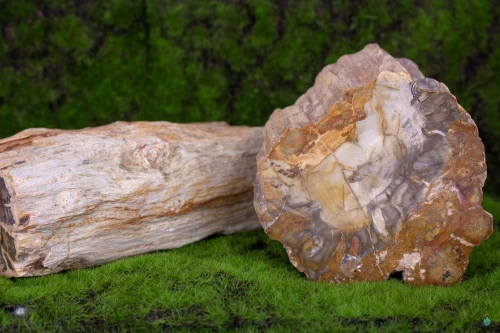
Petrified Wood
Wood replaced by silica that still shows tree rings and bark texture. It is heavy and hard, around 7 on the Mohs scale.
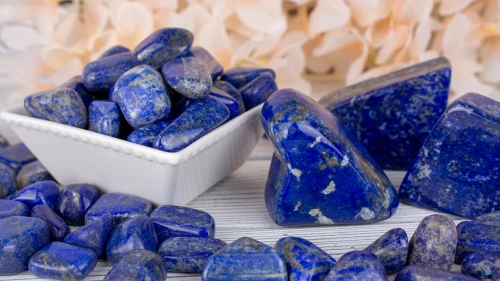
Lapis Lazuli
A deep blue rock, not a single mineral, usually with white calcite veins and tiny flecks of golden pyrite.
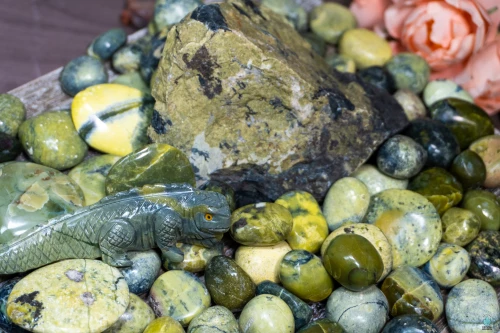
Serpentine
Green and often mottled with a waxy, slightly greasy shine. It is soft and easy to scratch with a knife.
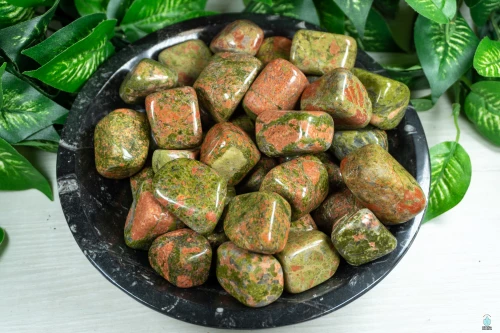
Unakite
Altered granite with speckled pink feldspar, green epidote and clear quartz. The pink and green mix is the giveaway.
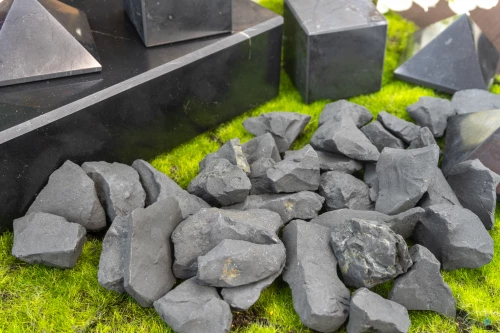
Shungite
Matte black and carbon-rich. It is light for its size and can leave a dark mark on paper.
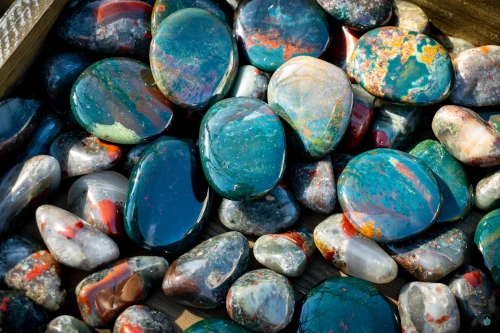
Bloodstone
Dark green chalcedony dotted with red iron-oxide spots that look like drops of blood.
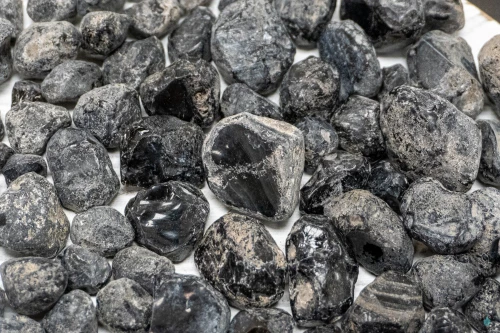
Apache Tear
Small rounded nodules of obsidian. They look black, but hold one to the light and it glows smoky brown.
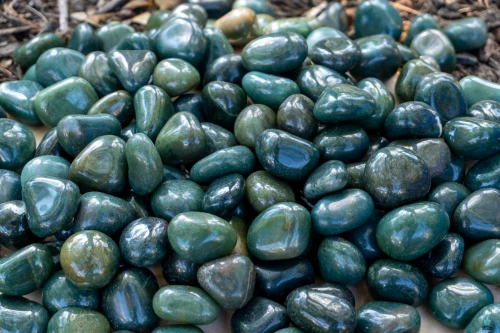
Moss Agate
Milky or translucent chalcedony with green, moss-like patterns. The "moss" is really mineral inclusions, not plant life.
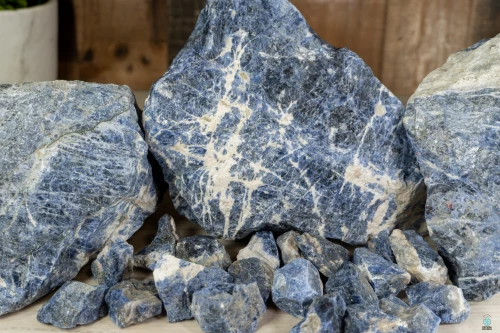
Sodalite
Royal blue with white veins and a hardness of about 5.5 to 6. It looks like lapis lazuli but lacks the golden pyrite flecks.
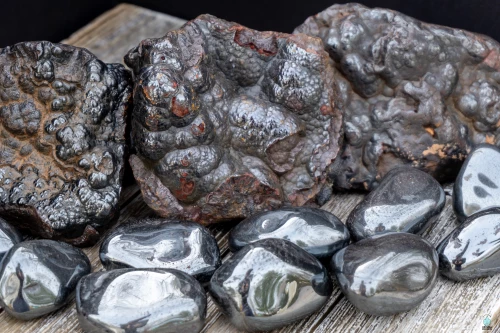
Hematite
Steel-grey and metallic, noticeably heavy, and it leaves a reddish-brown streak when rubbed on unglazed porcelain.
5 Quick Tests to Identify a Rock at Home
No app handy? These simple checks narrow things down fast.
1. Look at color and texture
Is it glassy, grainy, layered or sparkly? Can you see individual crystals or grains?
2. Test the hardness
A fingernail scratches soft stones (about 2.5), a copper coin reaches about 3.5, and a steel knife about 5.5. If nothing scratches it, it is probably quartz or harder.
3. Check the streak
Rub the rock on unglazed porcelain. The color of the powder can differ from the rock, for example hematite leaves a reddish-brown streak.
4. Try a drop of vinegar
Fizzing suggests calcite, which is found in limestone and marble.
5. Feel the weight
Very heavy for its size can point to metal-rich minerals like hematite. Very light may mean pumice or shungite.
Still stuck? Skip the guesswork and use the app.
Rock Identifier FAQ
How do I identify a rock?
The fastest way is to snap a photo in a rock identifier app. To do it by hand, look at color, texture and grain size, then test hardness with a fingernail, copper coin and steel knife, and check the streak on unglazed porcelain.
What is the best rock identifier app?
Crystal Council Rock Identifier matches your photo against a large knowledgebase built by crystal and mineral experts, and premium members can chat with the team if a result looks wrong. It is free to download on iPhone and Android.
Can I identify a rock by taking a picture?
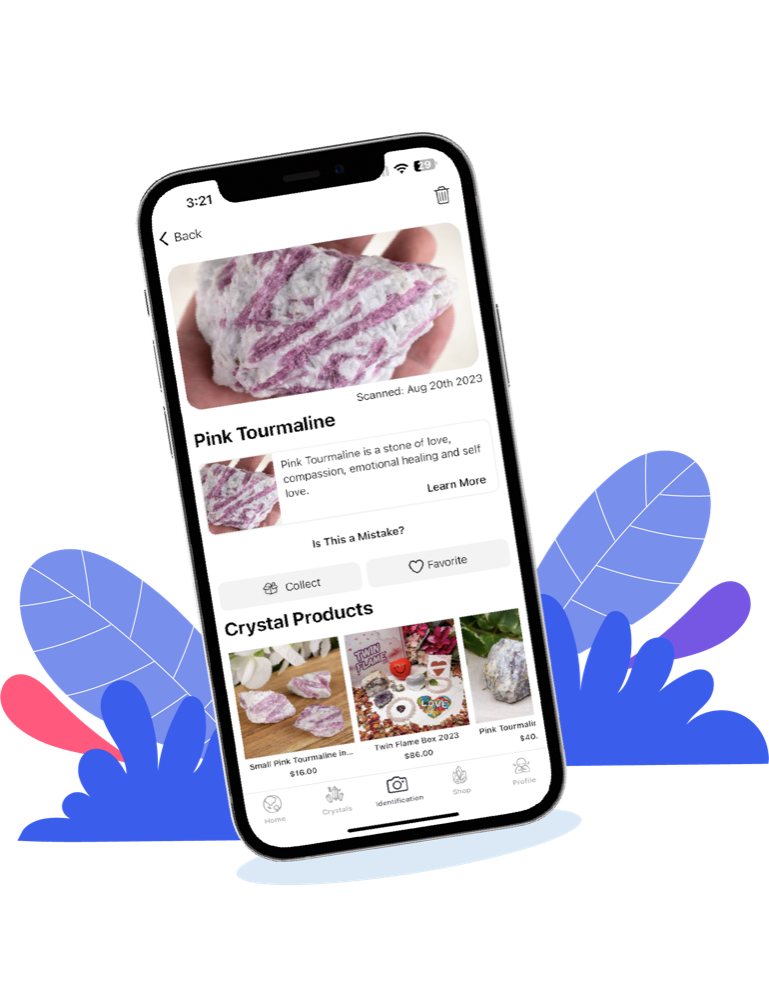
Yes. Open the app, take a photo or upload one from your camera roll, and it returns the closest match along with its properties. Use natural light and a plain background for the best results.
How can I tell if a rock is igneous, sedimentary or metamorphic?
Igneous rocks cooled from magma and often look glassy or speckled. Sedimentary rocks are layered and may contain fossils or visible grains. Metamorphic rocks are banded, foliated or sparkly because heat and pressure reshaped them.
Is the rock identifier app free?
Yes, it is free to download with a limited number of identifications. Premium ($5.99/month or $29.99/year) adds unlimited identifications and expert chat.
Get the Free Rock Identifier App
Snap a photo and know what you are holding in seconds.