 Crystal Council Rock Identifier
 Scan to Download
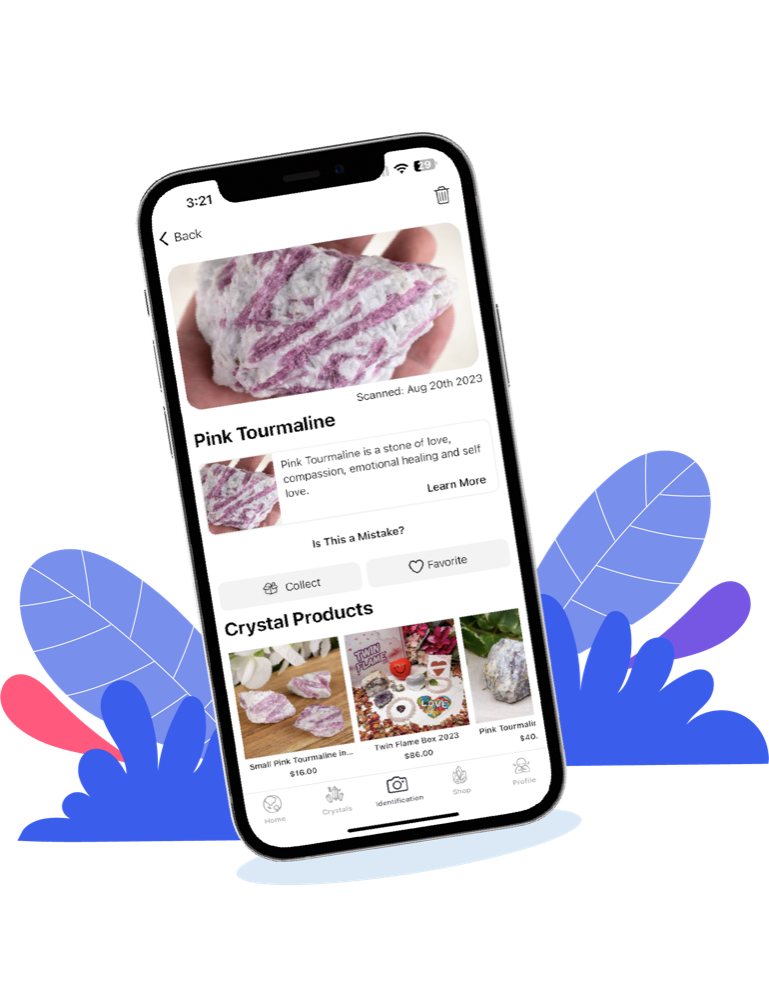

How to Identify a Crystal in 6 Steps
Work through these clues in order and most crystals reveal themselves quickly.
Check the color
Note the main color and any banding, spots or color changes. Be careful: many crystals come in several colors.
Look at the luster
Is it glassy, waxy, silky, pearly or metallic? Luster is often more reliable than color.
Study the shape
Points, cubes, blades and rounded clusters each point to certain crystals. Tumbled stones will have lost this clue.
Test the hardness
A fingernail scratches about 2.5, a copper coin about 3.5, and a steel knife about 5.5. Quartz and harder stones scratch glass.
Do a streak test
Rub the crystal on unglazed porcelain. The color of the powder, such as pyrite's greenish black, is a strong clue.
Or just scan it
Skip steps one to five. Snap a photo in the app and get a match in seconds.
Common Look-Alikes and How to Tell Them Apart
Amethyst vs. Purple Fluorite
Amethyst (hardness 7) scratches glass and forms points. Fluorite (hardness 4) is scratched by a knife and forms cubes.
Pyrite vs. Gold
Pyrite is brittle, forms cubes and leaves a greenish-black streak. Real gold is soft, bendable and has a golden streak.
Selenite vs. Calcite
Selenite is so soft a fingernail scratches it. Calcite is harder and fizzes when acid touches it.
Citrine vs. Heat-Treated Amethyst
Natural citrine is usually pale to smoky yellow. Strong orange stones are often heated amethyst.
Obsidian vs. Black Glass
Obsidian is natural volcanic glass with swirls or sheen and slight flow lines. Man-made glass can contain tiny round bubbles.
Lapis Lazuli vs. Sodalite
Lapis has golden pyrite flecks and white calcite. Sodalite is a cleaner blue with white veins and no gold.
Explore more on our crystal identifier and rock identifier pages.
What Crystal Is This? FAQ
How can I find out what crystal I have?
Take a photo in a crystal identifier app for an instant match. At home, check color, shine, shape, hardness and streak, and compare the results with a reliable crystal guide.
How do I tell what a crystal is without an app?
Note its color and luster, look for natural shapes like points or cubes, scratch-test it against a fingernail, copper coin and steel knife, and rub it on unglazed porcelain to see the streak color.
How can I tell amethyst from purple fluorite?
Amethyst is quartz at hardness 7 and will scratch glass or a steel knife. Fluorite is softer at hardness 4, so a knife scratches it, and it tends to form cubes or octahedrons instead of points.
Is my yellow crystal citrine?
Possibly, but much of what is sold as citrine is heat-treated amethyst. Natural citrine is usually paler and smokier, while heat-treated stones tend to be a strong orange. An expert can help confirm.
Can I get a crystal expert to check my crystal?
Yes. Premium members can tap "Is this a mistake?" on a result in the Crystal Council app and chat with the team directly.
Find Out What Crystal You Have
Download the free Crystal Council Rock Identifier and get your answer in seconds.